Discover
Discover Country
Namibia
'%3e%3cpath stroke='%23fff' stroke-width='20' d='M0 60 90 0'/%3e%3cpath stroke='%23d21034' stroke-width='15' d='M0 60 90 0'/%3e%3c/g%3e%3cg fill='%23ffce00' transform='translate(18 16.341)'%3e%3cpath d='m0-10 1.55 4.2L5-8.66l-.76 4.42L8.66-5 5.8-1.55 10 0 5.8 1.55 8.66 5l-4.42-.76L5 8.66 1.55 5.8 0 10l-1.55-4.2L-5 8.66l.76-4.42-4.42.76 2.86-3.45L-10 0l4.2-1.55L-8.66-5l4.42.76L-5-8.66l3.45 2.86z'/%3e%3ccircle r='5.5' stroke='%23003580'/%3e%3c/g%3e%3c/svg%3e)
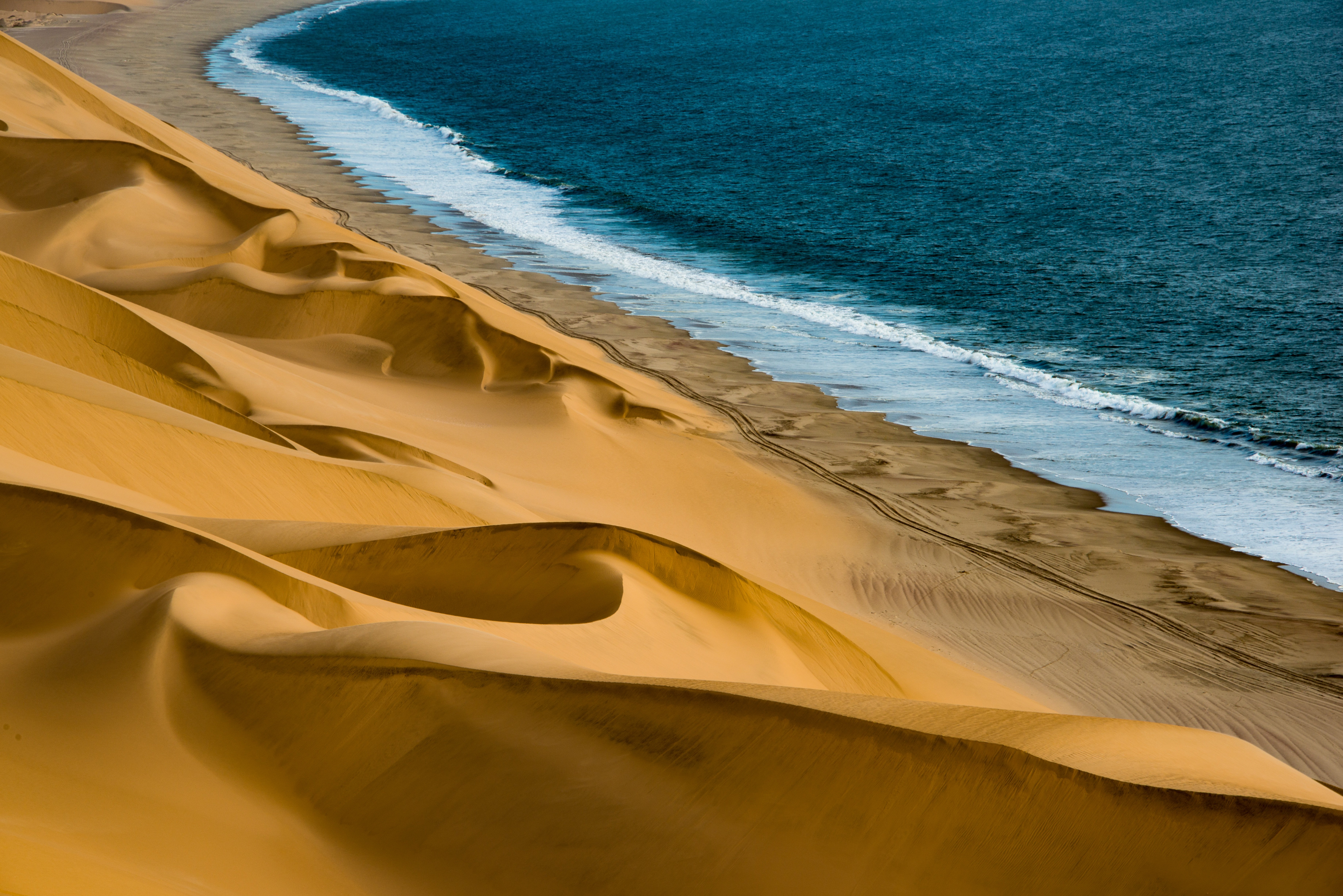
Namibia is an enchanting land of striking contrasts and home to the lively capital city, Windhoek. This African gem is a land of epic landscapes, from the otherworldly Namib Desert, boasting the towering red dunes of Sossusvlei, to the wildlife-rich Etosha National Park. Namibia's scenery is nothing short of breathtaking, offering photographers and nature enthusiasts a playground of rugged beauty.
In this vast and sparsely populated country, you'll encounter a rich tapestry of cultures, from the indigenous Himba people to the urban buzz of Windhoek.
Due to the country's wealth of indigenous cultures and a colonial history, Namibians speak nine different languages, one of which is German.
Namibia's commitment to wildlife conservation shines through in its numerous sanctuaries, where you can witness desert-adapted elephants and rhinos.
Additionally, the country's star-studded night skies in places like the NamibRand Nature Reserve make it a prime destination for stargazers. Whether you're embarking on a thrilling safari, exploring the eerie landscapes of Deadvlei, or connecting with the warm and diverse people, Namibia promises an adventure that's as diverse as its terrain.
Namibia's tourism sector is renowned for its commitment to eco-friendly practices, making it an ideal destination for responsible travelers seeking to explore and conserve the world's natural wonders.
Most visited cities in Namibia
Discover Country
Windhoek
Windhoek is Namibia's capital and largest city (population 430,000 in 2020). It is in the geographic centre of the country at an elevation of 1,600m. This is the city where most safaris travelling through Namibia begin, and also the first point of entry in Namibia should you arrive by airplane.
Explore
Discover Country
Swakopmund
Swakopmund, known as Swakop, is in the Erongo region of Namibia. It is the country's biggest coastal town and a resort for Namibians on holiday. The city's German origins are quite pronounced in beautiful old German colonial buildings throughout the city, making an even starker contrast for this town sitting at the edge of the Namib Desert. Swakopmund is like a German North Sea town with an African flair (or vice versa). : P70 : P8
Explore
Discover Country
Walvis Bay
Explore
Discover Country
Sossusvlei
Explore
Discover Country
Etosha National Park
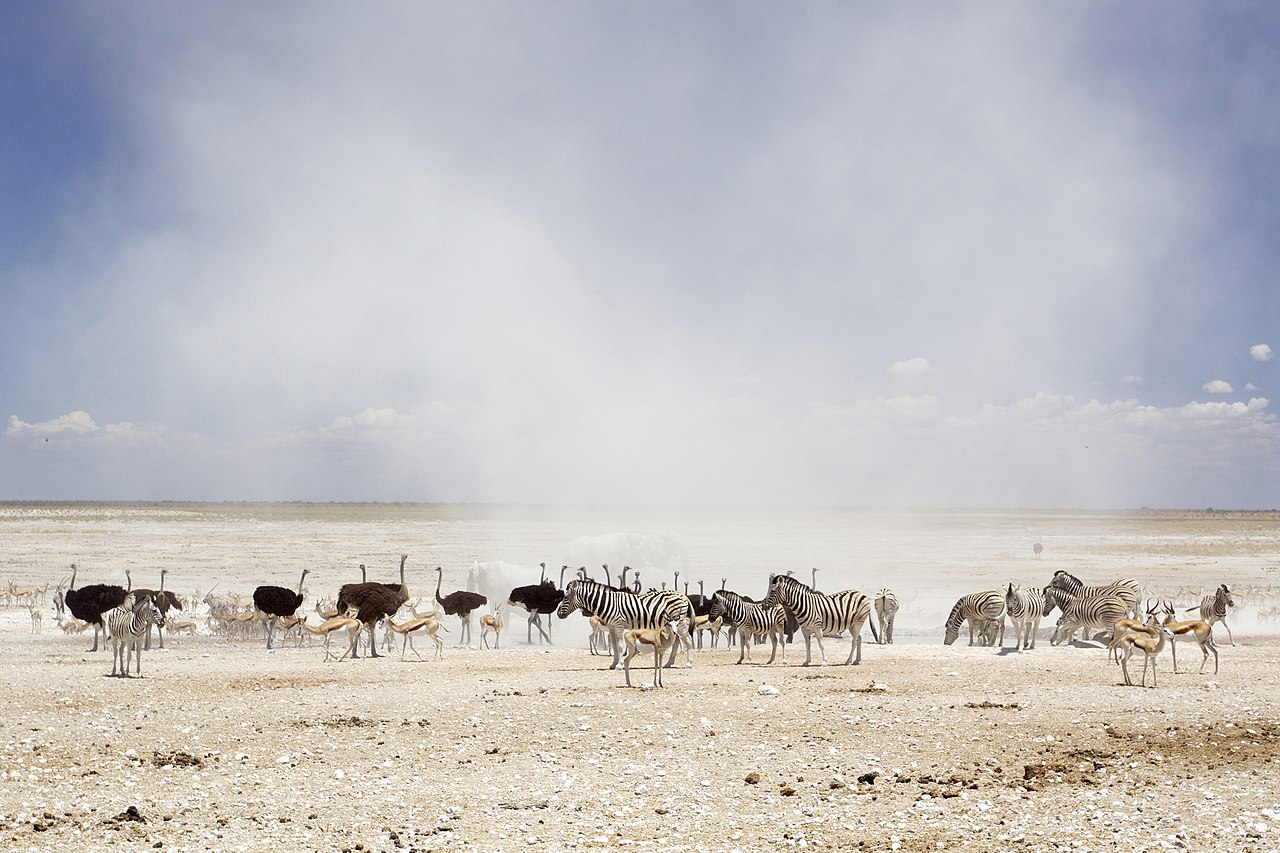
Etosha National Park, located in northwestern Namibia, is a spectacular wilderness area renowned for its unique landscapes and abundant wildlife. Covering an area of over 22,270 square kilometers, the park is characterized by its vast salt pan, grasslands, and watering holes that attract a diverse array of animal species. Etosha offers visitors an extraordinary safari experience, providing opportunities to witness Africa's iconic wildlife in their natural habitat.
Geography and Landscapes
Etosha National Park is dominated by the Etosha Pan, a massive salt pan that stretches over 4,800 square kilometers. The pan is a striking feature of the park and is visible from space. Surrounding the salt pan are diverse habitats, including grasslands, mopane woodlands, and sparse shrublands. The park's diverse landscapes create a variety of habitats that support a wide range of plant and animal life.Wildlife
Etosha National Park is home to an impressive array of wildlife species, making it one of Africa's premier game-viewing destinations. The park is renowned for its large populations of elephants, giraffes, lions, zebras, and various antelope species, including springbok, gemsbok, and kudu. Visitors can also encounter endangered species such as black rhinoceros and cheetahs. Etosha's watering holes are gathering points for animals, providing excellent opportunities for wildlife viewing and photography.The Etosha Pan
The Etosha Pan is a mesmerizing feature of the park and one of the largest salt pans in the world. The pan is a vast, shimmering expanse of white, dry terrain that stretches as far as the eye can see. During the dry season, the pan's stark beauty is juxtaposed with a few isolated waterholes that attract an abundance of wildlife, creating a unique and dramatic wildlife spectacle against the backdrop of the expansive salt pan.Birdlife
Etosha National Park is a haven for bird enthusiasts, boasting over 340 bird species. The park's diverse habitats support a rich variety of birdlife, including raptors, flamingos, ostriches, hornbills, and numerous migratory species. The pan and surrounding waterholes attract a significant number of waterbirds, making it an excellent destination for birdwatching and photography.Self-Drive Safaris
One of the unique aspects of Etosha National Park is the opportunity for self-drive safaris. Visitors can explore the park at their own pace, driving along well-maintained gravel roads that connect various waterholes and game viewing areas. The self-drive option allows for flexibility and freedom to spend more time observing wildlife, taking photographs, and immersing oneself in the beauty of the park.Night Drives and Guided Safaris
In addition to self-drive safaris, Etosha offers guided game drives and night drives led by experienced guides. Night drives provide an opportunity to witness nocturnal wildlife, such as hyenas, jackals, and owls, as they become active after sunset. Guided safaris offer insights into the park's ecosystem, wildlife behavior, and provide a wealth of knowledge about the flora and fauna of the region.Panoramic Viewpoints
Etosha National Park features several elevated viewpoints that offer breathtaking panoramic views of the surrounding landscapes. These viewpoints provide visitors with an opportunity to appreciate the vastness of the park, witness wildlife movements, and capture stunning photographs.Explore
Discover Country
Sesriem
Explore
Discover Country
Luderitz
Explore