Discover
Discover Country
Finland

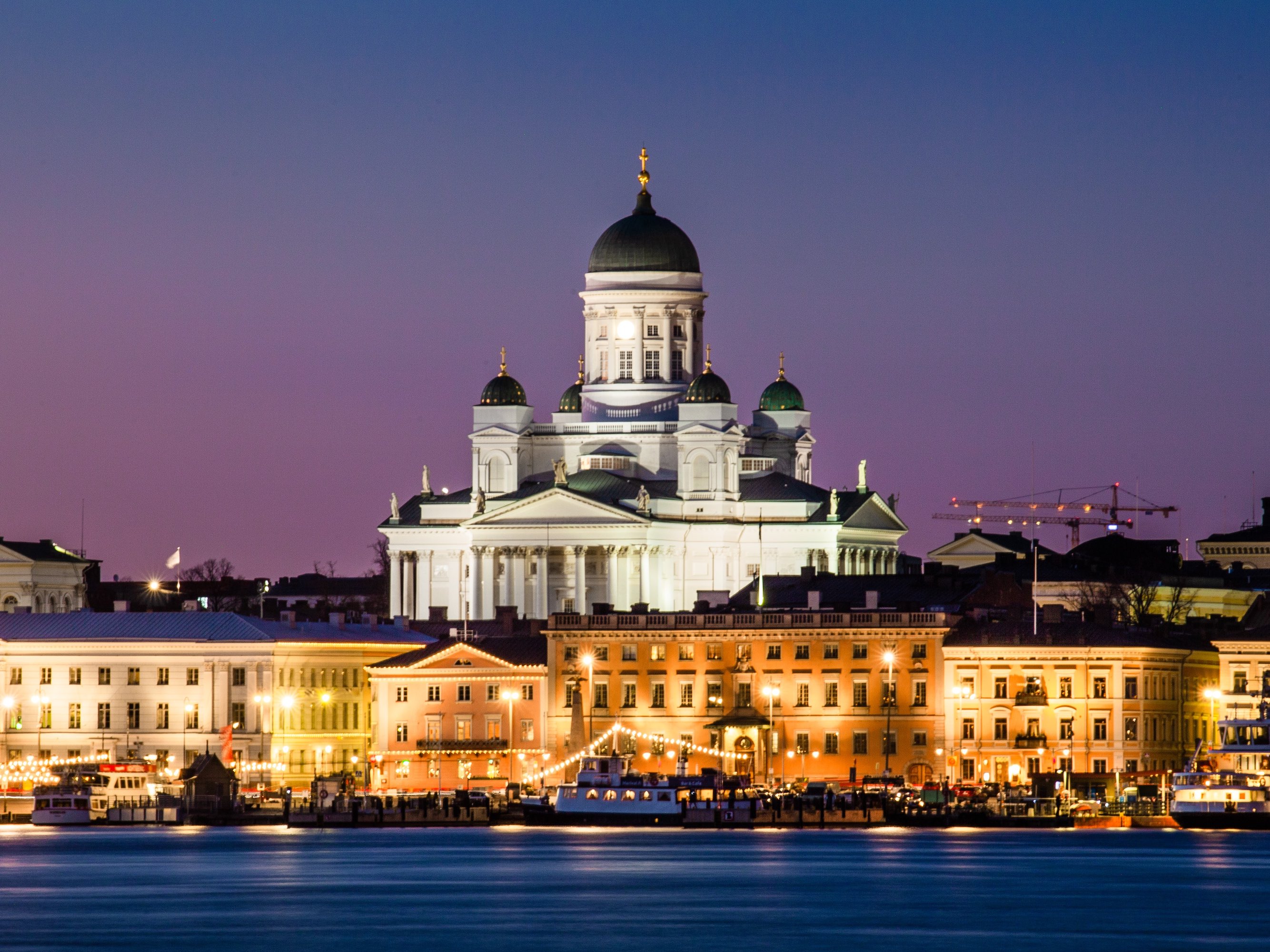
Finland, a Nordic country in northern Europe, offers a seamless blend of pristine nature, modern design, and unique cultural experiences. The country's capital, Helsinki, showcases its contemporary spirit with innovative architecture like the Kamppi Chapel of Silence and the iconic Temppeliaukio Church carved into solid rock. The city's design district and bustling markets like Kauppatori highlight its creative energy.
Finland's landscapes span from the magical Northern Lights in Lapland to the serene beauty of the thousands of lakes that dot its countryside. Finland's outdoor activities are a testament to its deep connection to nature, with opportunities for skiing, snowboarding, and husky sledding in winter, and hiking and kayaking in summer.
The indigenous Sami culture in Lapland offers insight into traditional lifestyles, while the saunas, a quintessential Finnish experience, provide relaxation and rejuvenation.
Whether you're exploring the historic town of Turku, discovering the UNESCO-listed fortress of Suomenlinna, or simply enjoying the midnight sun, Finland promises an immersive travel experience that captures its unique blend of modernity and natural wonder.
Most visited cities in Finland
Discover Country
Helsinki
Helsinki (Finnish) ( Helsingfors in Swedish) is Finland's capital and largest city. Established as a trading town by the Swedes in 1550, it wasn't until 1812 when the Russian Empire made it the capital city of the country. Today, this hustling and bustling city has more than 650,000 inhabitants, and it is the northernmost capital of an EU member state.
Explore
Discover Country
Rovaniemi
Rovaniemi is the capital of Finnish Lapland. Since a merger with the surrounding countryside, the municipality covers a huge area.
Explore
Discover Country
Turku
Turku (Swedish: Åbo ) is the oldest city and former capital of Finland. It was settled during the 13th century, making it one of the only few – and by far the largest – medieval cities in Finland. Turku is the cradle of Finnish culture, since over the years it has played an important role as the gateway to Finland for international influence. Nowadays Turku is a vivid city with clusters of maritime and medical business.
Explore
Discover Country
Tampere
Tampere (Swedish: Tammerfors ) is the third largest city in Finland with around 236,000 inhabitants, and around 376,000 in the metropolitan area (as of 2019; second largest). Being 170 km north of the Finnish coastal capital Helsinki, it is also the most populous inland town in the Nordic countries. The city lies on a narrow isthmus between Lake Näsijärvi, which reaches far to the north, and Lake Pyhäjärvi in the south. In addition, there are some 200 lakes and ponds in Tampere, and around 450 in the entire region. Despite being predominantly a former heavy industry centre, today Tampere is a major hub for information technology, research, education, culture, sports and business. In 2010, the City of Tampere came in first in an image survey comparing the largest cities in Finland. Leaving Helsinki behind, it was also found the most attractive city among Finns who plan on moving. In August 2021 the Tampere light rail system opened, the only one in Finland outside the capital area in the modern era.
Explore
Discover Country
Lapland
Explore
Discover Country
Oulu
Oulu (Swedish: Uleåborg ) is the biggest city in Northern Finland, with a bit more than 200,000 inhabitants (counting by the administrative borders, the city itself has a little less). : P70 : P8
Explore
Discover Country
Porvoo
Porvoo (Swedish: Borgå ) is a scenic small town 50 kilometers east of Helsinki, Finland. One of the most popular day trips from Helsinki, its picturesque city center of wooden houses is a proposed UNESCO World Heritage Site. : P70 : P8
Explore
Discover Country
Kittilä
Explore
Discover Country
Espoo
Espoo (Swedish: Esbo ) with a population of a quarter of a million is the second largest city in Finland. It's part of the Helsinki Metropolitan Area along with the cities of Helsinki, Vantaa, and the small city of Kauniainen (Swedish: Grankulla ) which is completely encircled by Espoo. : P70 : P8
Explore
Discover Country
Vantaa
Vantaa (Swedish: Vanda ) is in the Uusimaa region in southern Finland, right north of Helsinki. Part of the Helsinki Metropolitan Area, it is the fourth most populous city in Finland with about 238,000 inhabitants as of 2021. : P70 : P8
Explore
Discover Country
Jyväskylä
Explore
Discover Country
Saariselkä
Explore
Discover Country
Lahti
Explore
Discover Country
Lappeenranta
The City of Lappeenranta (population 70,000) is the economic and cultural centre of south-east Finland near the border of Russia and at the southern shore of the Saimaa, the largest lake (system) of Finland. Its culture and dialects are strongly part of eastern Finland, although Wikivoyage treats it as part of Southern Finland. Also known as Villmanstrand (its Swedish name and previous English name), Lappeenranta has a colourful, 360-year history influenced by its location in the border dividing western and eastern cultures.
Explore
Discover Country
Vaasa
Vaasa (Swedish: Vasa ) is the capital of the administrative region Ostrobothnia, Western Finland.
Explore
Discover Country
Inari
Explore
Discover Country
Kuopio
Kuopio is the largest city of North Savonia. Kuopio is surrounded by lakes from three sides, which supplies loads of beaches and the feeling of water being always close. Some of the wooden houses arranged as a grid have been preserved in the centre which makes it a nice place to visit. : P70 : P8
Explore
Discover Country
Kotka
Kotka is the southeasternmost major city in Finland, an important port at the mouth of the Kymi river ( Kymenjoki ). It is part of the Kymenlaakso region. The port town heritage and associated folklore is central for its identity. The Maritime Museum of Finland is located here.
Explore
Discover Country
Kemi
Kemi is a town in Finnish Lapland, at the northernmost tip of the Gulf of Bothnia. Most tourists are drawn by two wintry sights: its world famous Lumilinna Snow Castle & Hotel and the unusual chance to have an icebreaker cruise. The city also boasts an array of shops, restaurants and bars. By its character, Kemi is far more like an ordinary Finnish town than something Lappish.
Explore